Project News

cobi13883-fig-0002-m

New paper: Growth of non-English-language literature on biodiversity conservation

Fellow Marie-Morgane Rouyer co-authored a publication in the journal Conservation Biology compared the growth in scientific studies in conservation published in English versus 15 other languages. It found similar rates of growth for 12 out of the 15 languages, underscoring the importance of non-English-language articles to improving the understanding of biodiversity and its conservation. The publication was led by Shawan Chowdhury and Tatsuya Amano at the University of Queensland, Australia. Continue reading “New paper: Growth of non-English-language literature on biodiversity conservation”

Lumbierres_Poster_SCCS

Poster: Area of Habitat maps for the world’s terrestrial birds and mammals

Fellow Maria Lumbierres presented an e-poster entitled Area of Habitat maps for the world’s terrestrial birds and mammals at the Student Conference on Conservation Science, an hybrid event that took place in March 2022, at Cambridge. Continue reading “Poster: Area of Habitat maps for the world’s terrestrial birds and mammals”

Soria_poster_SCCS

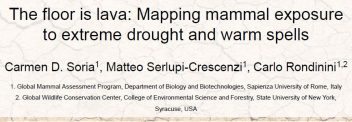
Poster: The floor is lava – Mapping mammal exposure to extreme drought and warm spells

Fellow Carmen Soria presented an e-poster entitled The floor is lava: Mapping mammal exposure to extreme drought and warm spells? at the Student Conference on Conservation Science, an hybrid event that took place in March 2022, at Cambridge.

[e-Poster] Soria, C.D., Serlupi-Crescendzi, M., Rondinini, C. (2022) The floor is lava: Mapping mammal exposure to extreme drought and warm spells?, Student Conference on Conservation Science, University of Cambridge, UK

The frequency and intensity of extreme climate events is increasing due to climate change. This will negatively impact many animal populations, increasing their extinction risk. Within extreme events, droughts and warm spells will probably affect the ability of homeotherms to thermoregulate. In this project, we have derived maps of future global terrestrial mammal exposure to both events in two different periods (2021 – 2020 and 2081 – 2100) and two emission scenarios (RCP 2.6 and RCP 8.5). We found that the percentage of range exposed increased with period and emission scenario.

fmars-09-812144-g004

New paper: Green Turtles Highlight Connectivity Across a Regional Marine Protected Area Network in West Africa

Fellow Martin Beal co-authored a publication in the journal Frontiers in Marine Science investigating the connectivity in green turtle populations across Marine Protected Areas in West Africa.  Using satellite tags to follow 45 green turtles during the internesting period, their results highlight the importance of the existing MPA network, but also its gaps. Continue reading “New paper: Green Turtles Highlight Connectivity Across a Regional Marine Protected Area Network in West Africa”

8BhF5a4-.jpg large

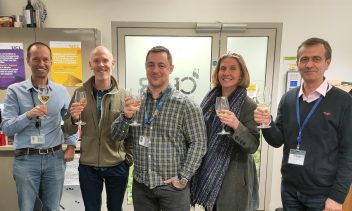
Bravo to Sean Jellesmark, awarded a PhD!

Huge congratulations to Inspire4Nature fellow Sean Jellesmark for having been awarded a PhD degree by the University College London, for his project on Measuring the impact of conservation on species’ populations.

This project was a collaboration between the University College London (supervisors: Tim Blackburn), the Zoological Society of London (Mike Hoffmann, Louise McRae, Robin Freeman), the Royal Society for the Protection of Birds (Richard Gregory) and IIASA (Piero Visconti). Continue reading “Bravo to Sean Jellesmark, awarded a PhD!”

2022-03-31_17-36-01

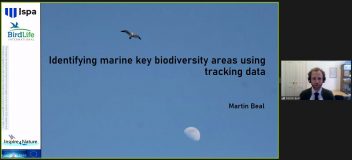
Bravo to Martin Beal, awarded a PhD!

Huge congratulations to Inspire4Nature fellow Martin Beal for having been awarded a PhD degree Magna Cum Laude by ISPA – Instituto Universitário! In a public presentation by videoconference, Martin presented his project on Identifying marine Key Biodiversity Areas using tracking data.

Continue reading “Bravo to Martin Beal, awarded a PhD!”

2022_03_MarieMorgane_SCCS

Presentation: Are Marine Protected Areas well-placed for the conservation of Atlantic migratory seabirds?

Fellow Marie-Morgane Rouyer presented her work at the Student Conference on Conservation Science, the 31st March 2022, at Cambridge. Her talk, entitled Are Marine Protected Areas well-placed for the conservation of Atlantic migratory seabirds?, won the third prize for the best presentation!

Continue reading “Presentation: Are Marine Protected Areas well-placed for the conservation of Atlantic migratory seabirds?”

2022_03_RESOM

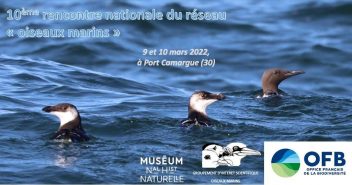
Presentation: Les Aires Marines Protégées sont-elles aux bons endroits pour conserver les oiseaux marins migrateurs ?

Fellow Marie-Morgane Rouyer was invited to present her work at the 10th meeting of the RESOM group (Réseau National Oiseaux Marins). This meeting, organised by the Office français de la biodiversité, the Muséum national d’Histoire naturelle and the Groupement d’intérêt scientifique oiseaux marins, took place on the 9-10 March 2022, in Port Camargue, France.

Continue reading “Presentation: Les Aires Marines Protégées sont-elles aux bons endroits pour conserver les oiseaux marins migrateurs ?”

6.MarieMorganeROUYER

Bravo to Marie-Morgane Rouyer for her new PhD position

Congratulations to Inspire4Nature fellow Marie-Morgane Rouyer for having obtained a PhD fellowship at the GAIA Doctoral School of the University of Montpellier!

Her PhD project will focus on examining the effectiveness of Marine Protected Areas at conserving migratory seabirds across the Atlantic Ocean. It is in direct continuity of her 23-month Inspire4Nature project.

Marie-Morgane will be based at the Center for Functional and Evolutionary Ecology in Montpellier (a Joint Research Unit of the CNRS and the University of Montpellier), and will continue to work in collaboration with BirdLife International and the UN Environment World Conservation Monitoring Centre, UNEP-WCMC, as well as with the Faculty of Sciences of the University of Lisbon.

We wish her all the best in this new stage of her career!

Carbon

New blog post: Offsetting the carbon emissions generated by the Inspire4Nature program

The Inspire4Nature fellows were responsible for keeping track of the project’s carbon emissions, and then choose a carbon offsetting project that can verifiably offset these emissions.
The fellows estimated that during the course of the Inspire4Nature project we have travelled a total of 358,250 km using flights, responsible for 66.248 tonnes of CO2 and 27,751 km by surface travel (mainly train), responsible for 4963 tonnes of CO2, for a total of 71.211 tonnes of CO2.
To offset the carbon emissions generated by the Inspire4Nature program, the fellows chose the Envira Amazonia Tropical Forest Conservation Project. This project is reducing emissions from deforestation and degradation (REDD+) by conserving nearly 200,000 ha of tropical forest while mitigating 12.5 million tonnes of CO2 equivalent emissions over its lifetime. The project is located in Acre Brazil within the Tabocais Key Biodiversity Area. Accordingly, conservation of the site will not only contribute to climate change mitigation, but also protect important native biodiversity.
See more details about the Inspire4Nature carbon offsetting strategy in a new blog post at the fellows’ website Science4Wildlife.